Making a Bronze Bowl

Metal clay is usually used for jewelry. However, there is no reason not to use it to make other decorative objects. Here we describe how to use metal clay to make a small decorative bowl. I used bronze, because it is inexpensive. However, the same methods would work with any type of clay you wanted to use.

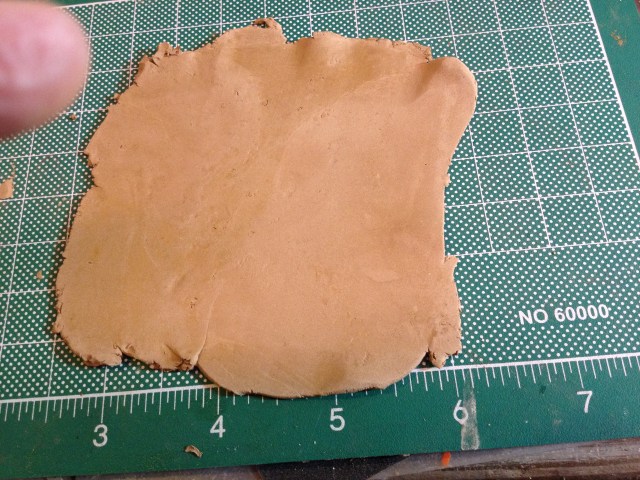
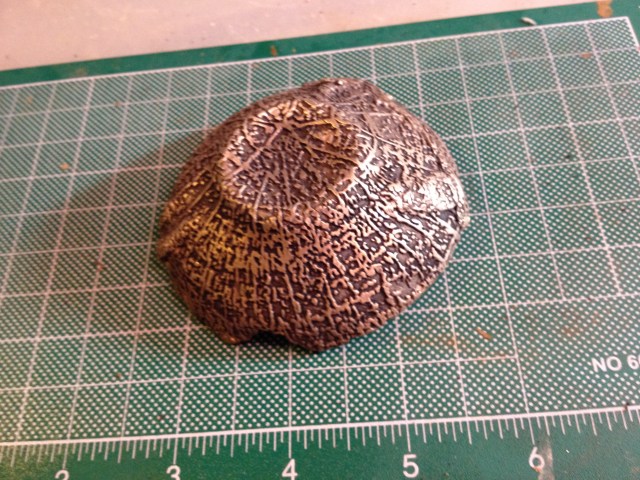
First, roll out a fairly large section of clay. I chose 0.75 mm as my thickness. Thinner than that would probably be hard to work with. If you want thicker, there is no reason not to do that. Then I used a texture sheet to texture it.

IMG_0671

IMG_0673

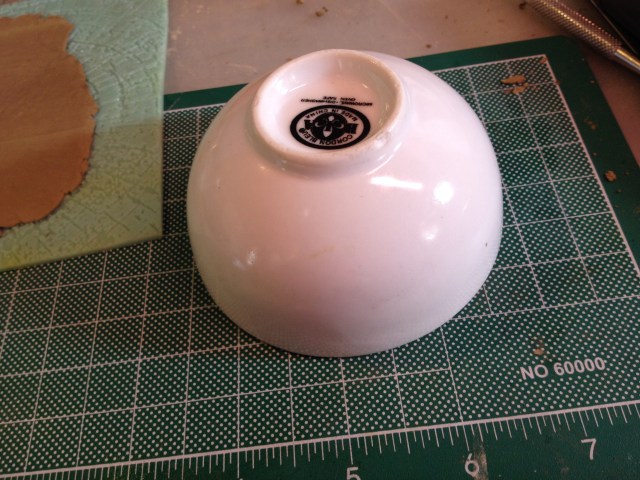
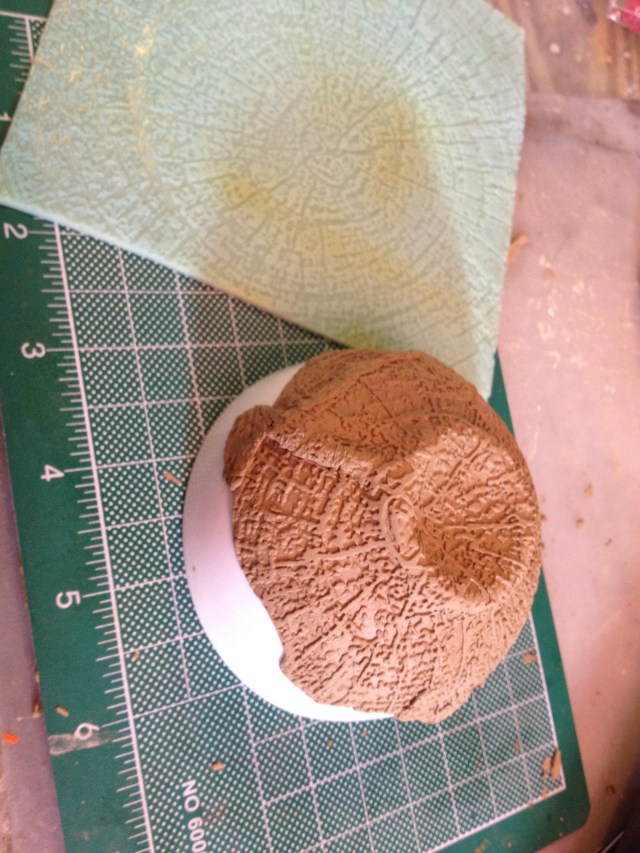
I chose a small bowl as my form. Then I placed the textured clay over it, and patted it down smooth without damaging the texture. I wanted a ‘wrinkled’ look, so I used the clay as it was. If you want a smoother bowl, then you should cut gores in the clay.

IMG_0674

IMG_0675

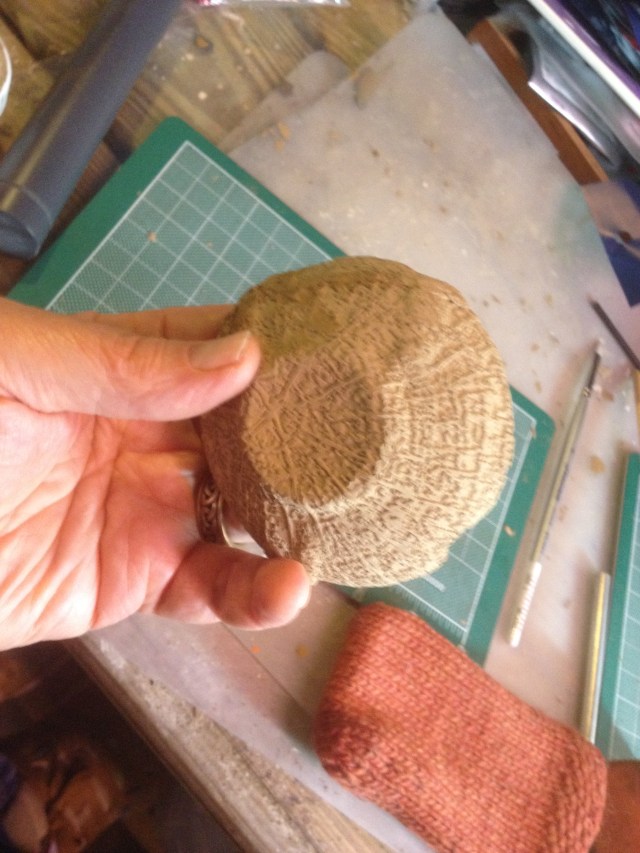
After the clay has thoroughly dried, it can be removed from the bowl and cleaned like any greenware.

IMG_0676

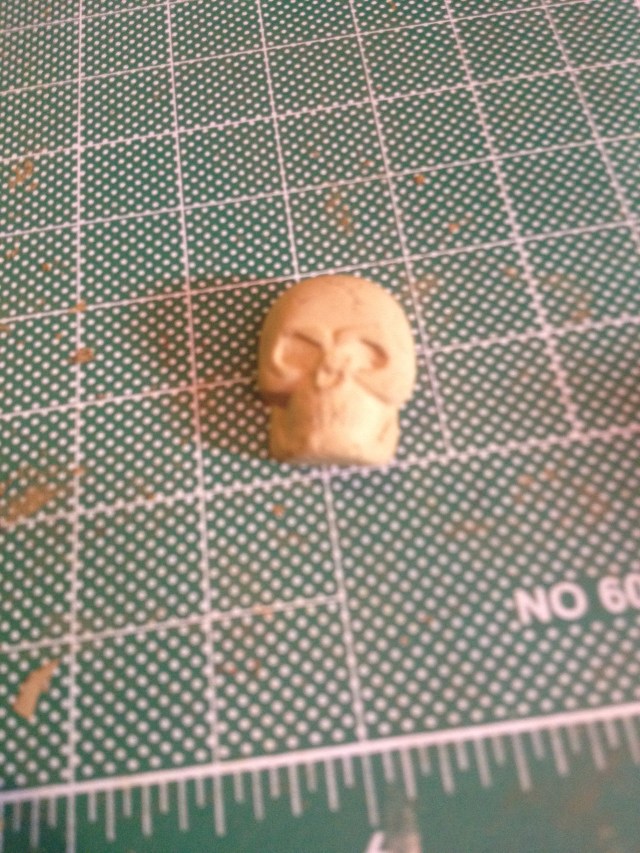
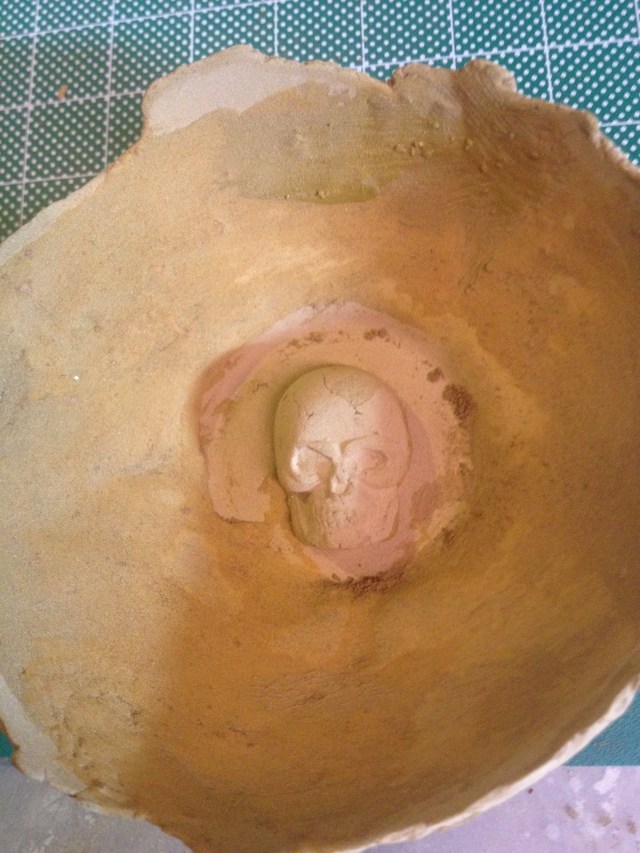
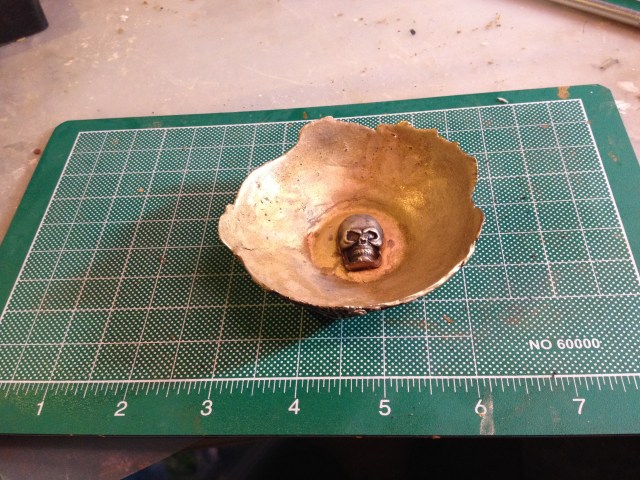
I thought it looked a bit plain, so I molded a skull (no reason, I just felt like it) to put inside the bowl. The molded skull, both before and after being attached to the bottom of the greenware bowl, appear below.

IMG_0677

IMG_0678

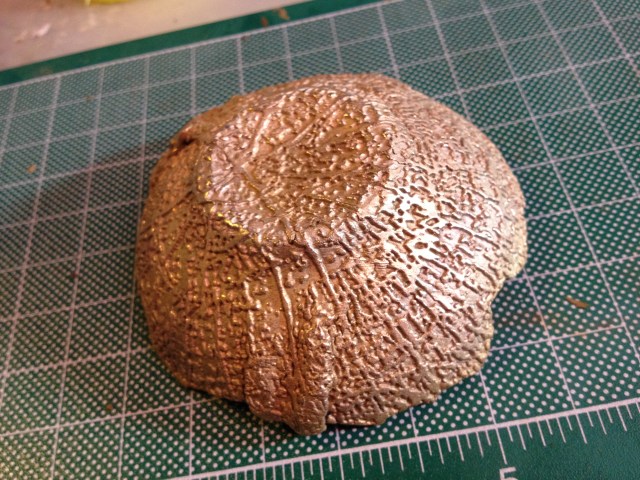
Afterwards, I fired the clay using standard methods. The fired and tumbled bowl appears below.

IMG_0679

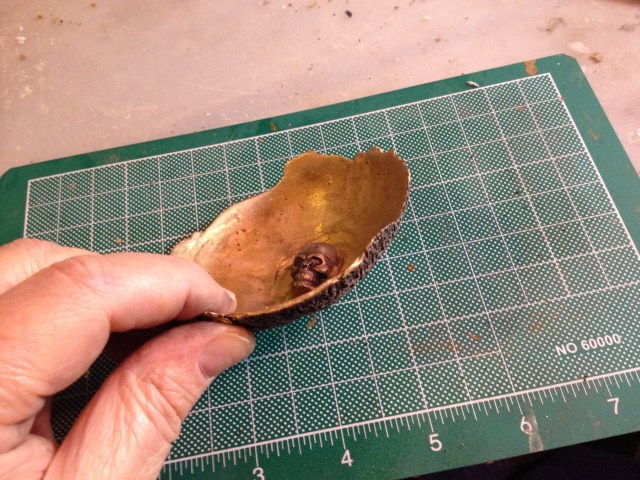
As is usually the case, application of a patina make the piece more visually interesting. I applied BlackMax ™ patina. The finished piece appears below.

IMG_0683

IMG_0682IMG_0681 (002)

If one wishes to use metal clay to construct a decorative bowl, the limits are pretty much one’s imagination and the size of one’s kiln and tumbler. Decorative pieces could have been molded and attached to the sides. Decorative holes could have been made. Colors, other than bronze and black, could have been applied. A very different shape could have been used (e.g. the lower part of a small bottle of an interesting shape). If the idea of making decorative bowls with metal clay appeals to you, run with it! Let your imagination run wild!


La Katoj De Ultaro

lovecraft-portrait

I have interests beyond metal clay. Among them are the language Esperanto and the writings of American horror icon H. P. Lovecraft. Relatively few of Lovecraft’s work has been translated into Esperanto. In an effort to rectify that, I place here my translation of Lovecraft’s fairy-tale like story, “The Cats of Ulthar”.

La Katoj de Ultaro

Verkisto: H P Lovecraft

Tradukisto: Lorenzo Bojulo


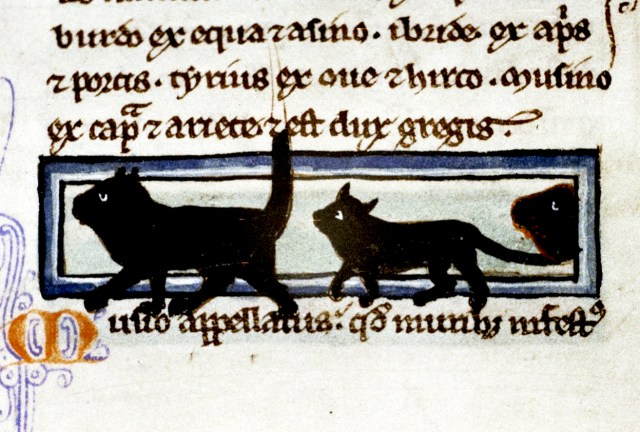
Oni diras ke, en Ultaro, urbeto lokas preter la rivero Skajo, la leĝo malpermesas la mortigecon de katoj. Mi sidas kaj fiksregardas al oni, kiu sidas apud la fiero kaj ronronas. Mi kredas, ke la rakontoj de la leĝoj de Ultaro estas veraj. La kato estas stranga, kaj scias multan sekretojn, kio la homoj neniam scias. La kato estas la animo de antikva Egiptio. La kato scias rakontojn, kion la homaro forgesis, de la antikvaj urboj de multaj mistikaj landoj. La kato komprenas la ĝangalo, kaj scias la kaŝajn sekretojn de antikva Afriko. La sfinsko estas la kuzino de la kato, kaj parolas la lingvon de la kato. Sed la kato estas pli antikva ol la sfinsko, kaj memoras aferojn, ke la sfinsko forgesis.

En antikvaj tempoj, en Ultaro, estis malbona maljuna kamparano. Li kaj sia malbona maljuna edzino ĝuis kapti kaj mortigi katojn. Mi ne scias la kialon. Eble ili malŝatis la noktan vokojn de katoj, kaj malĝuis katojn, tio kuris en la kampoj kaj ĝardenoj krepuske. Kio ajn la kialon estis, kaj la maljunaj viro kaj virino ĝuis mortigi katojn, kion venis apud sian domaĉon. La sonoj, tio oni aŭdis apud kio domaĉo nokte, indikis ke la morto ne venis rapide. Sed la loĝantoj de la vilaĝo demandis nenion de la maljuna viro kaj maljuna virino – iliaj velkaj vizaĝoj portis mienojn de kolero, kaj ilia domaĉo estis tre malgranda kaj kaŝa sub altaj etendaj kverkoj malantaŭ malatenta kampo. La homoj de Ultaro, tiuj havis katojn, malamis ĉi tioj strangaj gemaljunuloj, sed pli timis ilin. Ili neniam defiis la mortigistojn. Anstataŭ, la homoj estis dilegentaj, ke siaj katoj neniam aliris la malproksiman domaĉon sub la mallumaj kverkoj. Tiam akcidentoj okazis kaj kato malaperis kaj noktaj sonoj venis el kio malproksima domaĉo, la proprietulo de la forestanta kato lamentis, sen resulto, kaj dankas Fatalon, ke ne infanoj malaperis.

Fine, karavano de strangaj vaguloj venis, el la sud, al la mallarĝaj ŝtonaj ŝtratoj de Ultaro. Ili ne simili aliajn vagulojn, tiuj venis al Ultaro – ĉi tiuj vaguloj estis sortodivenistoj. En la vendoplaco da Ultaro, ili vendis brilajn bidojn kaj ludis strangan muzikon. Neniu scias al kian lando ĉi tioj vaguloj venis, sed, la preĝoj de la vaguloj estis strangaj. Sur la muroj de ilia ĉaroj, estis bildoj de homoj, kio havis kapojn de katoj, akcipitroj, virŝafoj, kaj leonoj. Kaj la ĉefo de la karavano vestis kapornamon kun du virŝafoj kornoj kaj, inter la kornoj, kurioza disko.

En la karavano, loĝis knabo. Ĉi tiu knabo havis ne patron ne patrinon. Sed li havis malgrandan nigran katidon. Li tre amis tion katidon. La pesto prenis preskaŭ ĉion, tamen, malgranda molhara besto alportis ĝojon. La knabo, tiu la karavano namis Meneson, redetis multe kaj ploris malmulte, kiam si kaj la katido sidis kune sur la ŝtupoj de la ĉaroj.

Je la tria mateno en Ultaro, Meneso ne povis trovi sian katidon. Li laŭte ploris en la vendoplaco, kaj la homoj de Ultaro rakontis de la maljuna paro, kaj de la nokte sonoj. Meneso aŭdis. Ploreco iĝis meditecon, kaj mediteco iĝis preĝon. La knabo levis brakojn. Li vokis al la suno, en lingvo, kia la loĝantaroj de Ultaro ne komprenis. Neniu provis multe kompreni – la ĥimeraj formoj de la nuboj, hibridaj estaĵoj kon kornoj kaj diskoj inter ĉi tioj kornoj, estis tro strangaj. Sed la naturo ofte trompas homojn, kiu havas tro multan imagon.

Dum la nokto, la vaguloj forlasis Ultaron, kaj neniam revenis. Baldaŭ, la homoj de Ultaro rimarkis, ke ĉio la katoj de la urbo ankaȗ malaperis. Katoj kaj grandaj kaj malgrandaj – katoj nigraj, grizaj, flavaj, blankaj, kaj striaj – ĉio malaperis. Maljuna Krakano, la urbesto de Ultaro, opiniis ke la vaguloj ŝtelis la katojn, ke la ŝteleco estis venĝio por la mortigeco de la katido de Meneso. La urbesto malbenis la karavanon kaj la knabon. Sed Nito, la maldika notario, opiniis ke la maljuna viro, kiu malamis katojn, estis kulpa. Ankoraŭ, neniu defiis la malbonajn maljunajn edzon kaj edzino, kvankam Atalo, la filo de la tavernestro, diras ke si, krepuske, vidis la katoj de Ultaro apud la malbena domaĉo, marŝis en formeĝo, kaj malrapide kaj solene. Ĉirkaŭ la domaĉo, li diris, la katoj marŝis, en nokta rito de bestoj. Li ne sciis, kio la katoj faris, sed si vidis ilin. Le homoj de Ultaro ne kredis lin, por Atalo estis tro juna. Oni opiniis ke la malbona duo uzis sorĉado alvoki la katojn, kaj poste mortigas ilin.

Tiam nokto, la homoj de Ultaro dormis, sed kun vana kolero. Matene, la katoj revenis. Grandaj kaj malgrandaj, nigraj, grizaj, flavaj, blankaj, kaj striaj – ĉioj katoj revenis. La katoj ŝajnis glataj kaj dikaj, kaj ili ronronis multe. Kvankam, Krakano diris ke la homoj de la karavano ŝtolis la katojn, ĉar ili volis venĝion. Li diris ke nur ĉi tio estis ebla, ĉar katoj neniam revenis al la domaĉo de la malbonaj maljunaj viro kaj virino.

Baldaŭ, la homoj do Ultaro rimarkis strangan fakton: ĉiajn manĝaĵojn, la katoj rifuzis. Viandon, lakton, kaj kremon, la katoj rifuzis. La katoj de Ultaro faris nenion, sed ronroni aŭ dormi apud la fiero aŭ en la sunlumo.

Antaŭ semajno, la homoj de Ultaro rimarkis ke, el la malbona domaĉo sub la etendaj kverkoj, ne lumoj aperis. La maldika Nito rimarkis ke la homoj de Ultaro vidis ne maljunan viron ne maljunan edzinon antaŭ la katoj malaperis. Eventuale, Krakano konkeris la timojn kaj vojaĝis al la strangan silentan domaĉon, kvankam la urbesto ordonis ke Ŝango, la forĝisto, kaj Tulo, la ŝtonmasonisto, akompani sin. Ŝango kaj Tulo rompigis la kadukan pordon. Malekstere, ili trovis, sur la tera planko, du homajn skeletojn, sen karno, kaj multajn nigrajn koleopterojn, tioj esploris mallumajn angulojn.

La burĝoj de Ultaro havis multan demandojn. Zato, la funebraĵisto de Ultaro, opiniis ke io maĉis la skeletojn, kvankam Nito opiniis male. La multaj demandoj de la burĝoj tre ĝenis Ŝangon kaj Tulon – poste la demandoj, ili diziris ke si restis en la urbesto, anstataȗ akompani la urbeston. La burĝoj eĉ eksamenis Atalon, tiu vidis la katoj kiam ili estis rondiranta la domaĉon, kvankam, poste, la burĝoj donis kandon al Atalo.

La burĝoj diskutis la maljunajn viron kaj virinon. Ili diskutis la vagulojn, malgrandan Meneson, kaj la nigran katinon de Meneso. Ili diskutis la preĝon de Meneso, kaj kion okazis en la ĉielo kie Meneso preĝis. Ili diskutis la katojn, kaj la skeletojn en la domaĉo sub la arboj en la fiherba kampo.

Eventuale, la urbesto kaj la burĝoj faris novan leĝon. Estis leĝo, kio ili diras estis tre grava. Komercistoj el la lando de Hatlego kaj vojaĝantoj el la lando de Niro ofte diskutas ĉi tion leĝon. Tio leĝo diras tio, en Ultaro, neniu rajtas mortigi katon.


chats

Make the Piece Fit the Client

This posting is a little different. It’s not about a technique as much as it is about making sure that a piece done on commission meets the client’s needs.

I recently had a client who had lost an extremely beloved cat approach me. She wanted jewelry to commemorate her cat, and to give as a gift to a friend who had helped her in the cat’s final days.

After some discussion, it was determined that she wanted two pairs of (as close as you can come with handmade items) identical earrings and a pendant. Then, I discussed materials. She thought that silver looked ‘cold’, and wanted the memories of her cat to be ‘warm’. That suggested bronze or copper. I showed her some bronze work and some copper work, and she preferred bronze. The metal was now chosen.

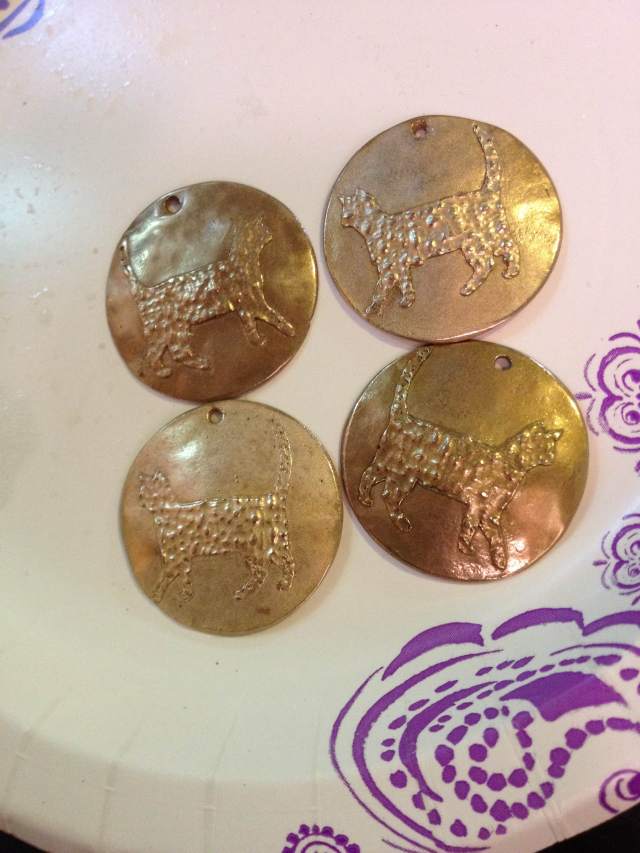
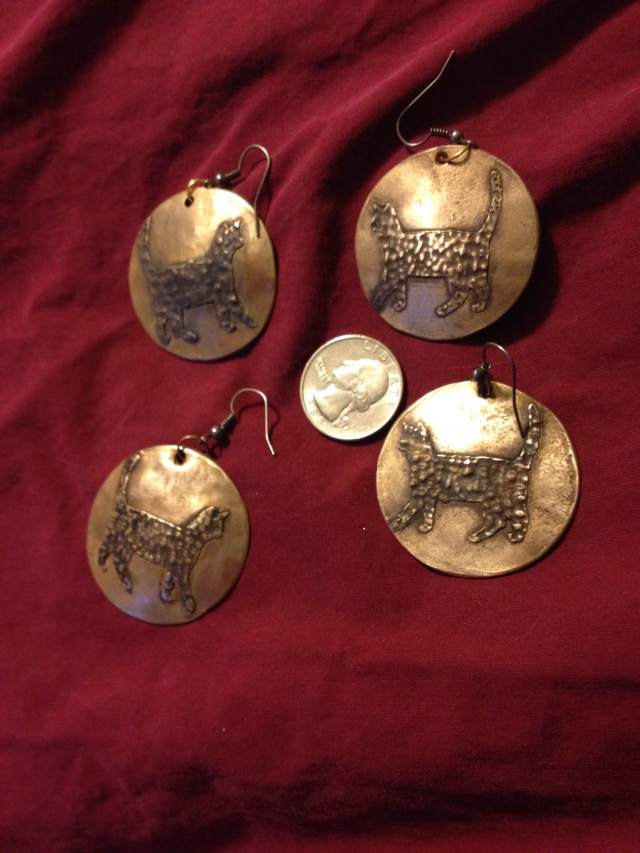
Next, I looked at the earrings she often wore. Many of them were fairly large. Circles were a common motif. That suggests putting a cat on a circular earring. The cat she lost was black, and often walked with ‘parade tail’ (tail held erect). That suggests putting an image of a cat with tail erect on the earring. I chose to make the cat image a half millimeter thicker than the backing, and to texture it, to make it stand out. I chose to dome to earrings so they would have more three-dimensionality, as she wanted the memories of her pet to be fully three dimensional. Now I was ready to move ahead.

The earrings, as they came out of the kiln, looked like this:

IMG_0649

That reflects the cat, but it does not reflect the color of the cat, nor the true warmth of the bronze. I tumbled and polished the earrings, making them quite shiny. Then I applied Max  Black ™ (very carefully) to darken the cat, but leave the background shiny. The result:

IMG_0655

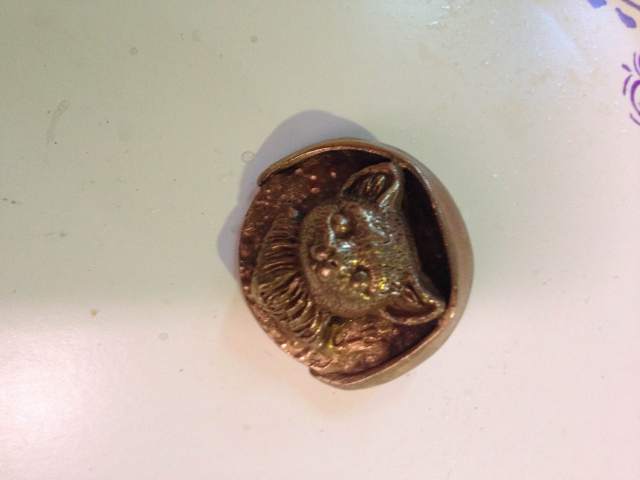
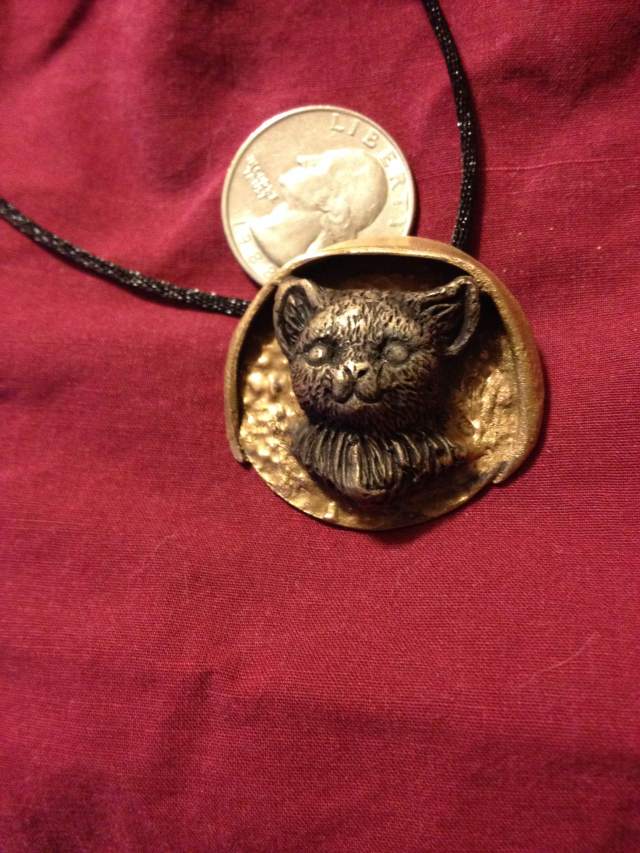
Just what the client wanted (the coin is for scale). Now I moved on to the pendant. The cat had moderate fur length, not too long and not too short. I searched until I found a mold that resembled the cat and used that to make the central image. The cat had a tendency to stare out of partial concealment (as many cats do). That suggested to me the idea of making a pendant of a cat that seemed to be looking out from under a curtain. That was the direction to go in!  I chose to use an invisible bale, so it would not distract from the image. The work that came out of the kiln looked like:

IMG_0650

Now it was time to give it some life. Again, I tumbled and polished it. Again, I used Black Max ™ to darken the cat. I then polished the cat to give it a touch of ‘life’. The final product looked like:

IMG_0654

Again, the coin is for scale. Just what the client wanted!

So there you have it. When making a piece on commission in which the client only gives you vague guidelines, try to determine what they actually want. Sometimes, subtle symbolism (like bronze for warmth) matters. Ask the right questions, and have a happy client!

Vintaj(tm) Inks for Adding Color

Vintaj(tm) inks are opaque, and therefore might not seem like a promising choice for adding color to metal clay. If you’ve paid for silver, why do you want to cover it up? However, with a little creativity, the inks can be quite useful.

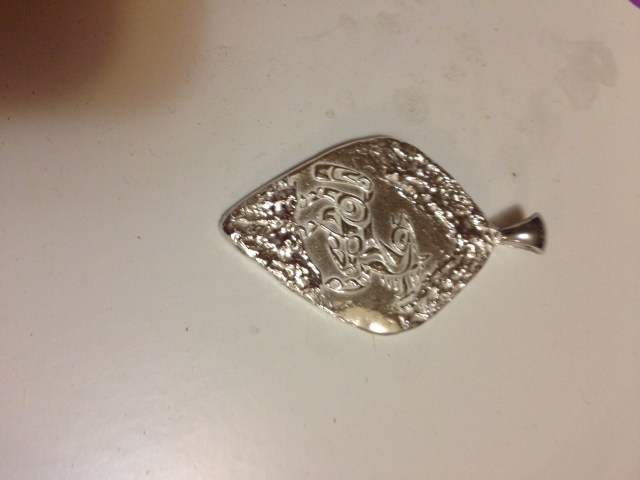
This is a pendant that I made using standard metal clay techniques. The rough surface above and below the horse were made by brush dragging, a technique for adding texture. Brush dragging will be discussed in detail in some other post.

IMG_0622

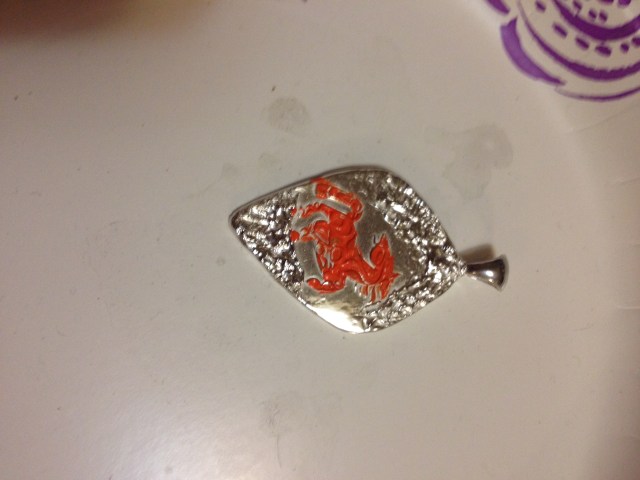
Here is the pendant after adding the first color (colors were chosen by the person who commissioned this piece — obviously, one could use any color one wished). The horse is now quite visible, but it has lost the shine of silver. That will be fixed in a moment. The odd purple spots are because I was working on a paper plate. A paper plate is actually a good work surface for Vintaj ™ inks — one can simply discard the plate when one is finished, and not worry about spills.

IMG_0623

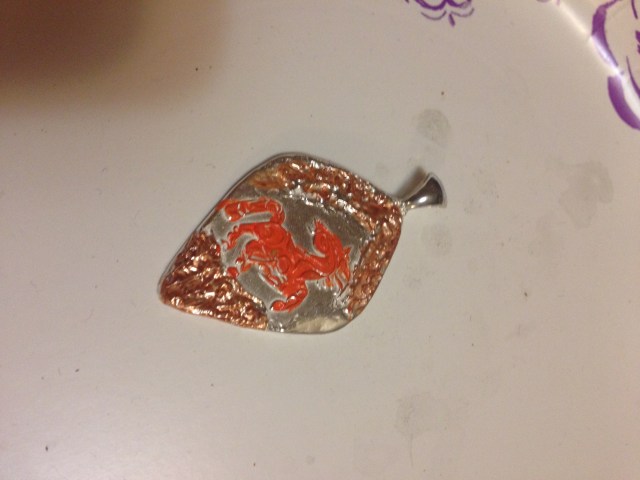
Here is the pendant after darkening the brush dragging areas. I used a red/brown for these areas, so it would pick up the red of the horse, but still contrast.

IMG_0624 (002)

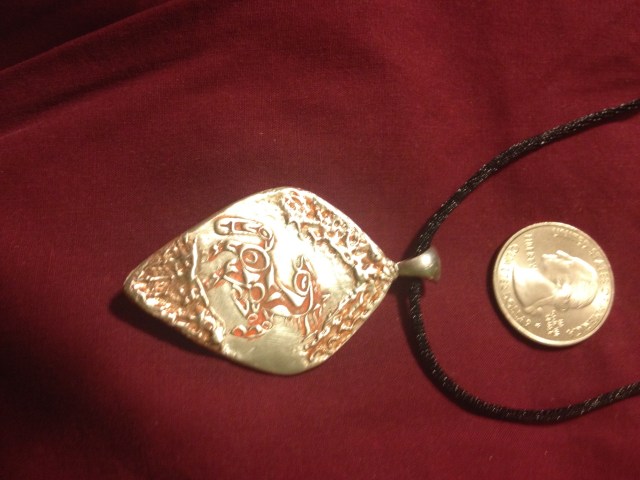
After these steps, using a nail polishing block, I simply sanded the piece. The colors in the raised areas came off. The colors in the recessed ones remained. Now, the beauty of the silver shows through.  In this picture, the pendant has been put on a velvet cord, and a coin has been photographed with it to indicate scale.

I honestly think this piece would have looked better with darker colors. However, this piece was done on commission, and the client picked the colors. However, that is no way changes the basic premise: Vintaj(tm) brand inks, despite being opaque, can be used to give a new look to metal clay.

IMG_0627

An Adventure in Cloisonee

Who doesn’t admire cloisonee, the art form of using wire to create cells in metal and then enamel the cells? I recently did my first cloisonee. The amount of work required is quite large, but the results are worth it. I’m not going to go through a step-by-step account, but I will give you the general outlines of the process.

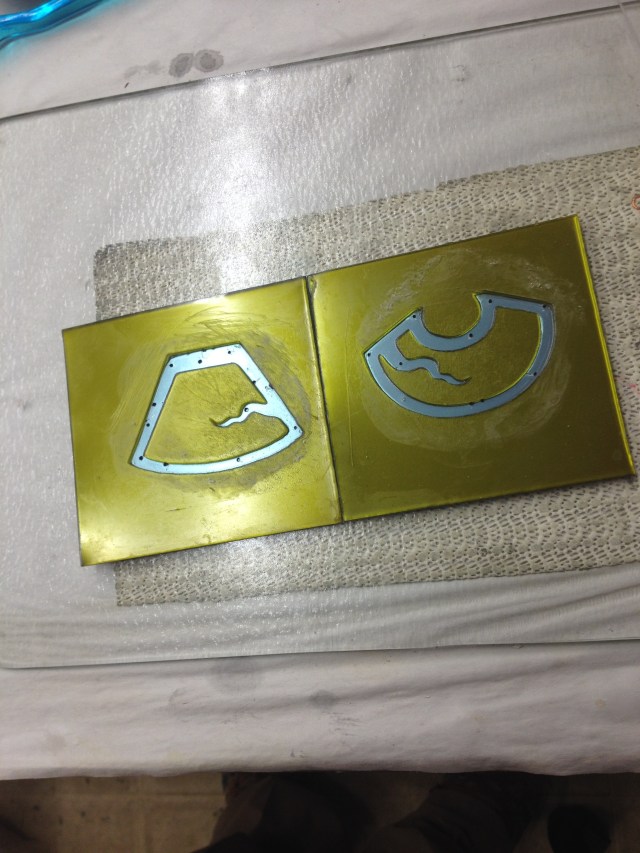
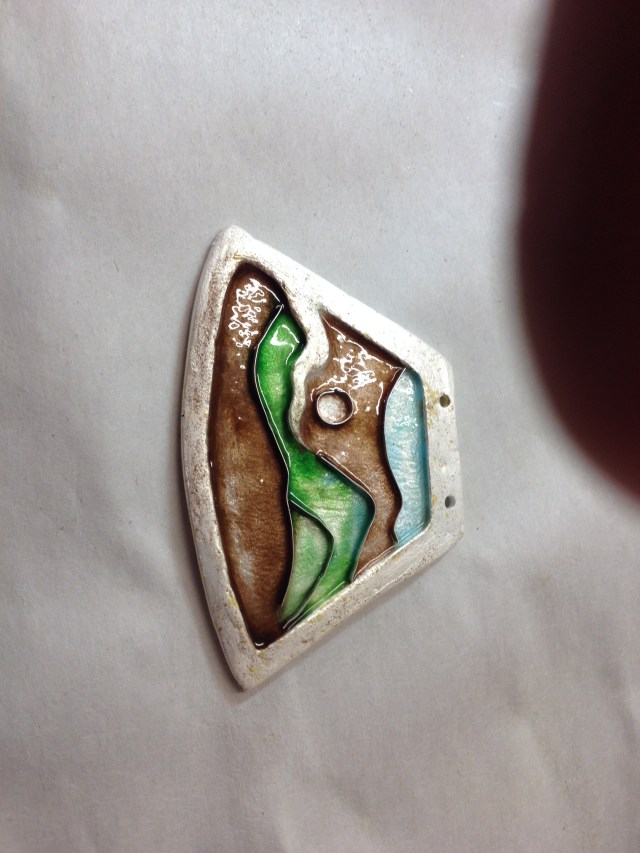
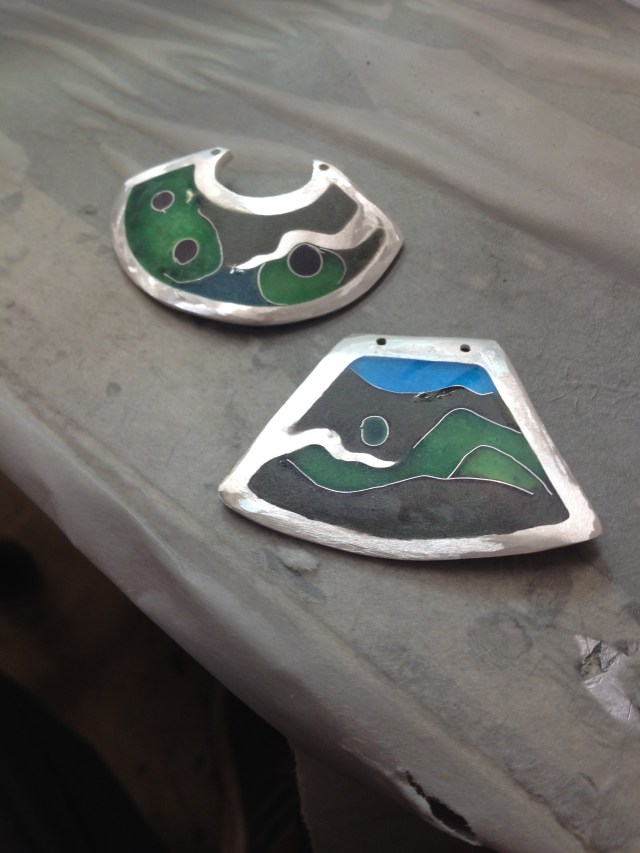
IMG_0605The first step was to make photopolymer (that’s another topic, to be discussed later) plates of the forms. As you can see above, I started with two forms. Since I only finished the one on the left, I will focus on that one here. The one on the right is reasonably close to being done, but I decided not to wait to do this post. The holes in the plate are there to let air out. Without the holes, air is trapped when one pushes silver clay into the mold, and the edges are not as crisp. Crisp edges are very important for cloisonné.

IMG_0606

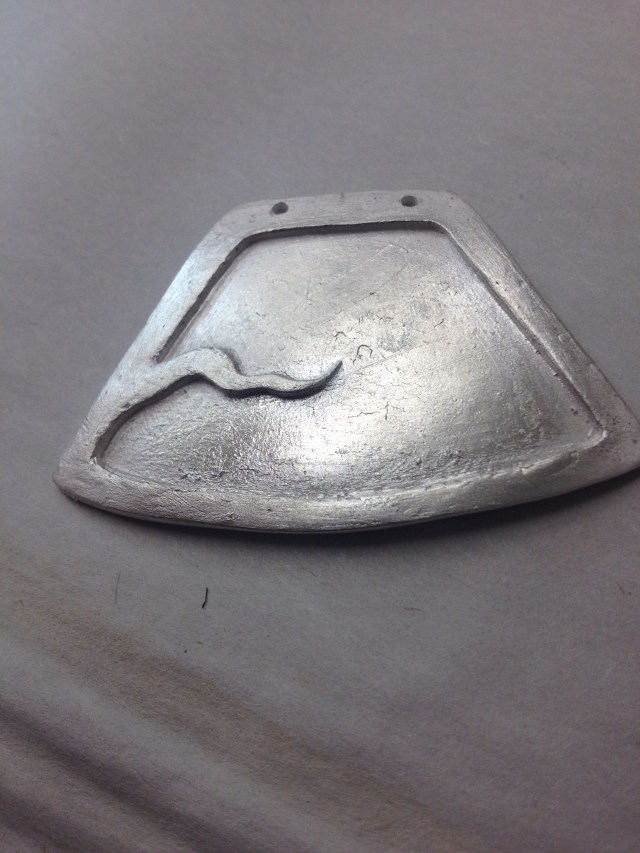
This is the silver part of the piece, molded, cleaned, fired, and tumbled like typical metal clay. For cloisonee to turn out right, it is important that the walls of the cell be vertical. This was done during the greenware stage.

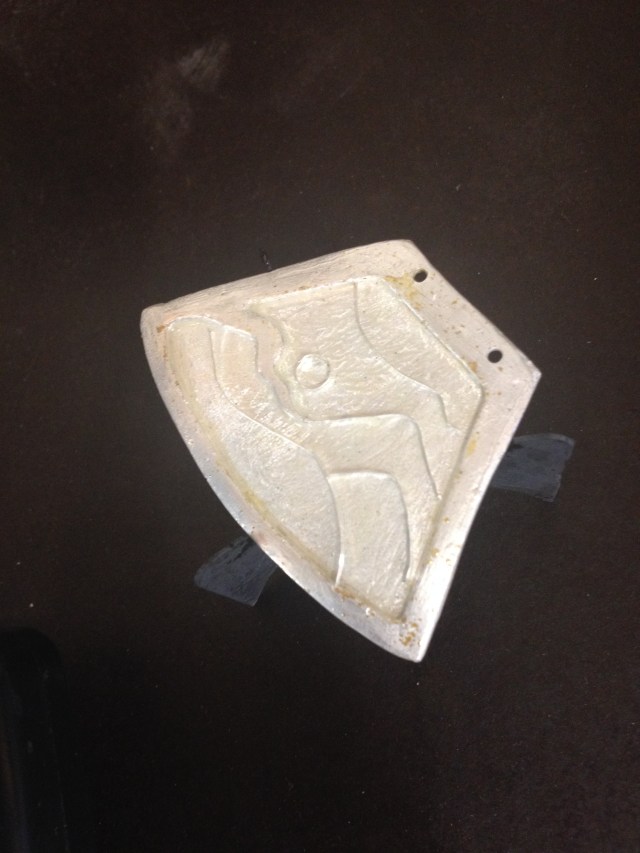
IMG_0609Here is the back of the piece, with the wires in place. I chose an abstract mountain landscape, because I was working in the wonderful mountains of North Carolina.

IMG_0610

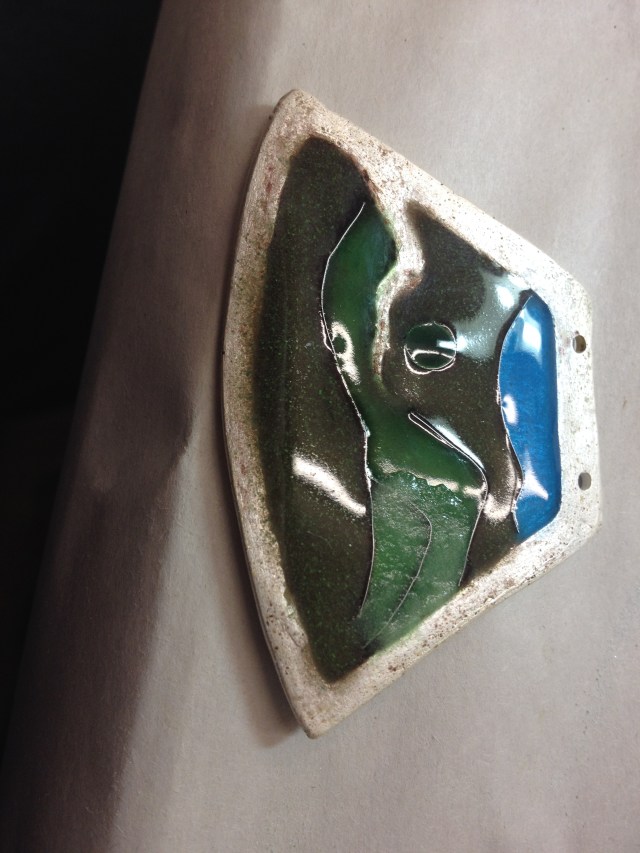
Here is the first layer of enamel. The translucent enamels should go down before the opaque ones. That way, the enamel will seal any gaps in the wire, and the opaque enamels can’t leak. The colors become more intense as repeated layers of enamel go down.

IMG_0612

Here is the piece, fully enameled. The enamel is not yet smooth, and the wires stick up. That is corrected by polishing and grinding, making the enamel smooth and getting the wires to be at the level of the glass. There are a few errors of enamel on the silver. This is not serious, as that, too can be ground away. The shading on the hills was created by using multiple shades of green enamel and placing one shade atop another.

IMG_0613

Here are both pieces. Both have been ground down so the enamel is smooth. However, the grinding process makes the glass rough. One could leave the piece that way, if one wished. However, I went one further step and fired the piece on last time. This melts the top layer of the glass, making the piece smooth.

IMG_0614

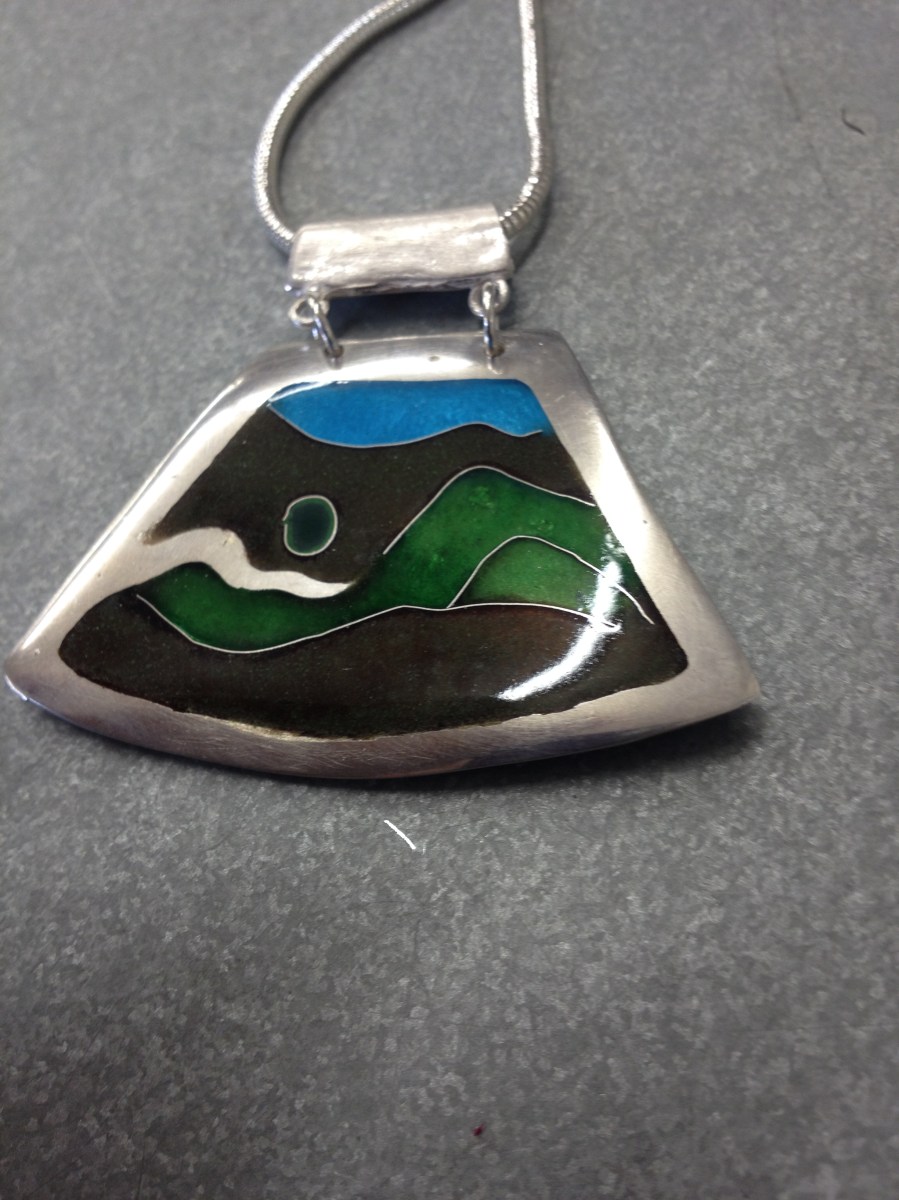
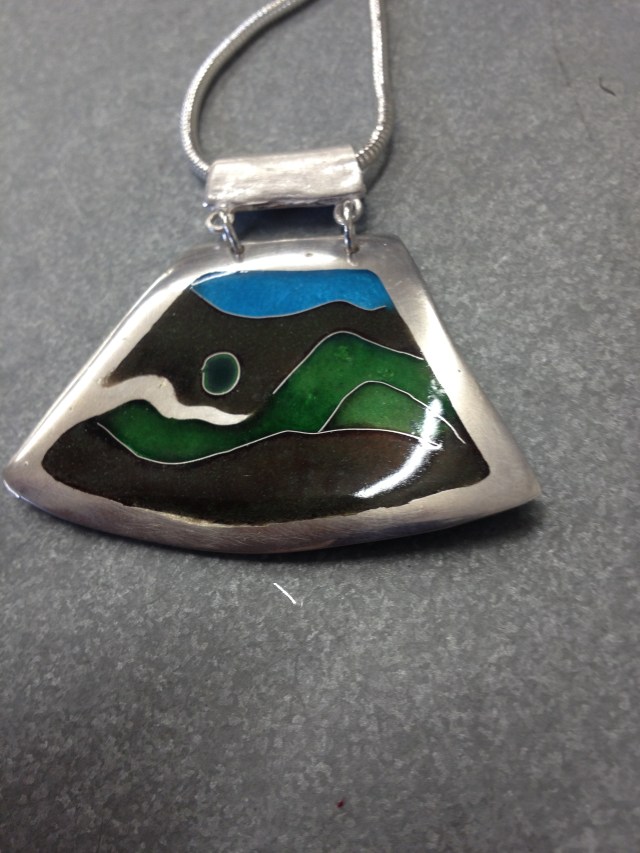
The finished piece! The brown represents the fertile valleys of the Appalachians, the green mountains are the mountains themselves, and the brown mountains are the dark hills beyond. The opaque green circle represents the fertile green hills beyond — always another land to explore!! Finally, the sky is just that — the clear sky of North Carolina.

Cloisonnee is a very rewarding, but very labor intensive, process. I expect that I will do more of it, but only when I have the time to devote to it that it deserves.


Bronze II

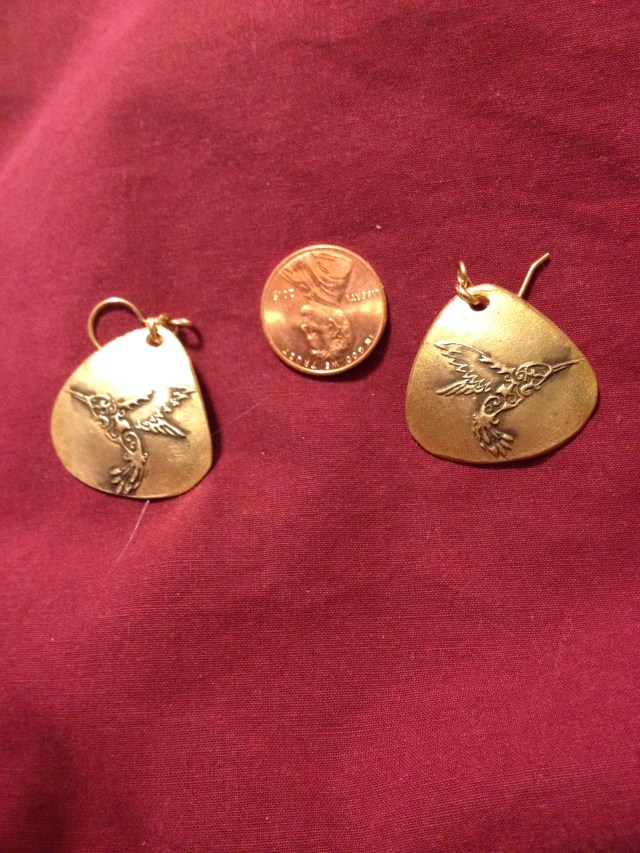
IMG_0600I continue to work with bronze. These are a pair of earrings with a hummingbird design (as in all pictures, the coin is for scale). These were made by stamping the bronze clay then drying it over a plastic Easter egg. That gave a degree of roundedness that made the earrings much more visually interesting than they would have been had they simply been flat.


IMG_0598

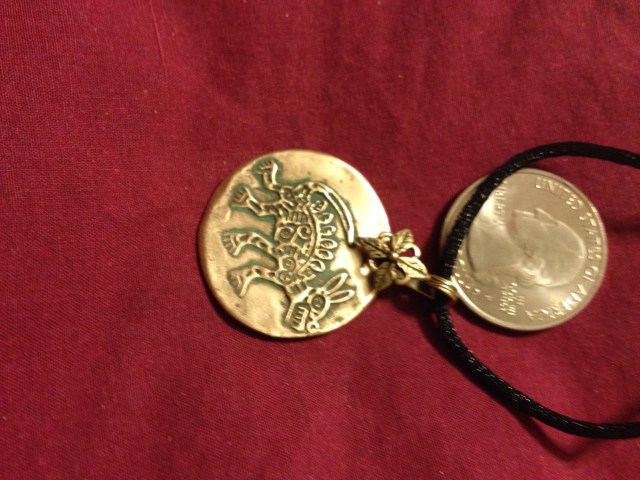
This pendant is an Aztec dog. I am well aware that Aztecs did not have bronze, but it’s the material I used. I used an icepick bale. This piece represents a bit of an experiment. Instead of simply darkening for patina, I mixed a green and a brown alcohol ink. I then painted the piece, and sanded off almost all the ink. That left the pendant with the look of ancient bronze.IMG_0599

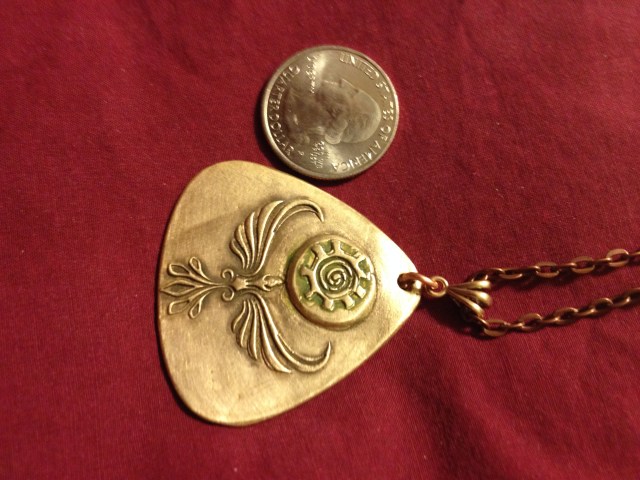
This pendant is an experiment in blended styles. The phoenix is western in style. The sun is drawn from a Native American petroglyph. Again, I experimented with alcohol inks. I used liver of sulfur to bring out the phoenix, but used a blue-green alcohol ink on the sun. The sun was then sanded so that only traces of the ink remained. To give a hint of mixed metals, I made the jump ring joining the pendant to the bale from copper wire. The bale is also bronze, but of a different alloy than the pendant, so it has a different appearance.

H. P. Lovecraft’s ‘THE OUTSIDER’ in Esperanto

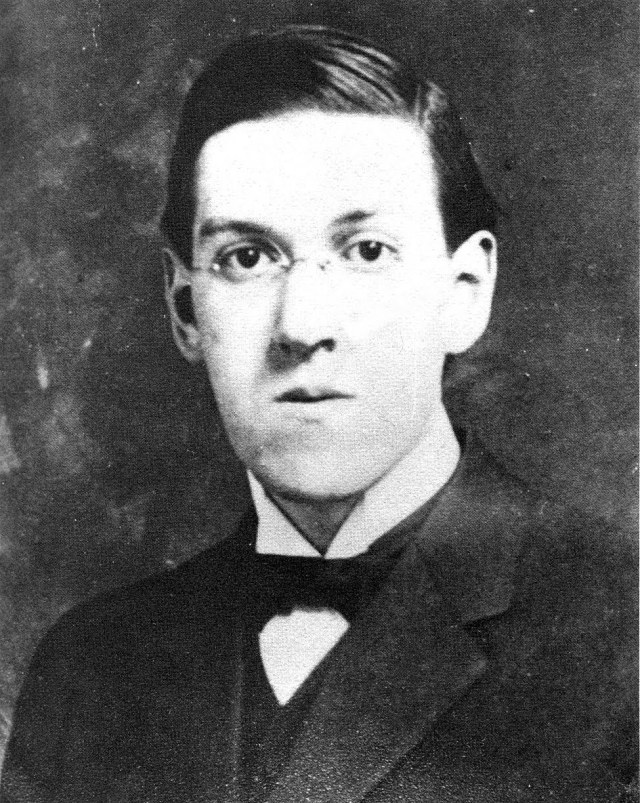
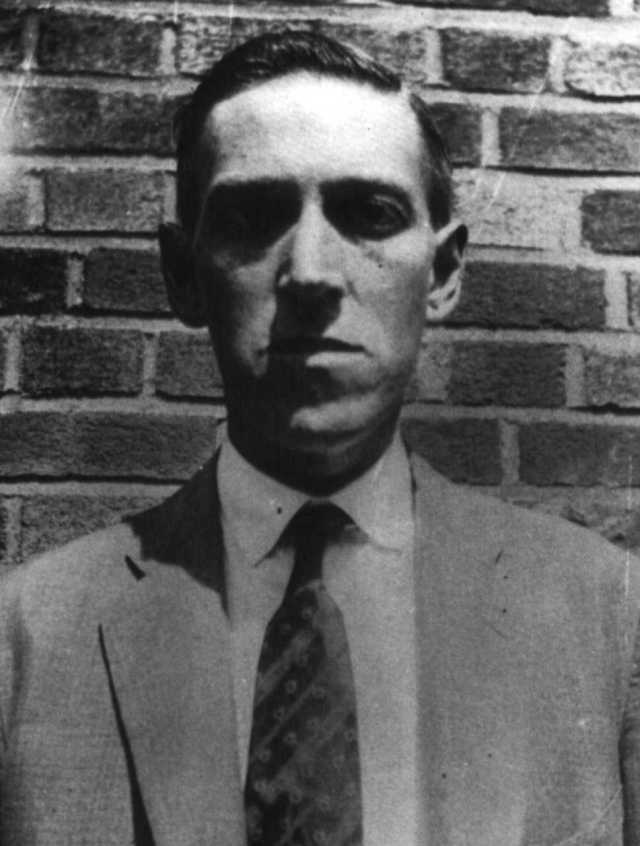
lovecraft4The focus of this blog is metal clay. However, I have other interests, and thought I would share one of them. I’m a huge fan of American horror writer, H. P. Lovecraft (his works, not his politics), pictured above. I am learning Esperanto. Very few of Lovecraft’s works have been translated into Esperanto. Therefore, I present my (possibly flawed) effort to translate one of his stories, titled, in English, ‘The Outsider’. Without further ado, The Outsider, in Esperanto:

La Eksterulo

Verkisto: H P Lovecraft

Traduko: Lorenzo Bojulo

Tiu nokto, la barono sonĝis pri multaj misaferoj.

Liaj gastoj iĝis malbelegaj, kvazaȗ

Sorĉestistoj kaj demonoj kaj kadavraj-vermoj.

Estis tre terura koŝmaro. Sed vere, ĉu li estis dorma?


Mia infanaj memoroj estas nenio sed timo kaj malĝojeco. Mi memoras multajn solajn horojn en ĉambroj kaj grandaj kaj malagrablaj. Estis ŝimaj brunaj muroj kaj multaj praaj libroj, kiuj flustris vortojn pri frenezeco. Estis palaj arbaroj, kio enhavas groteskajn, grandegajn arbojn. Malsanemaj vitoj kovris la arbojn. La dioj donis al mi — senpropramika, senespera, frakasa mi — tian ekziston. Ankoraȗ, mi estis strange kontenta. Mi tenis ferme miajn malvivajn memorajn, aparte kiam mia menso eble povus atingi aferojn, tiujn mi preferis forgesi.

Mi ne scias kien mi naskiĝis. Mi nur scias, ke la kastelo, kie mi loĝis, estis kaj senfine malnova kaj senfine terura. Estis plena de mallumaj koridoroj kaj altaj plafonoj, kie mi povis vidi nur ombroj kaj areneaĵoj. La ŝtonoj en la koridoroj ĉiam ŝajnas malbelege malseketa. Ĉie, estis misodoro, kvazaȗ kadavroj de multaj generacioj estis putritaj ie proksima. Ĉiam, malhelis. Mi ofte regardis brulajn kandelojn, pro mi esperis ke ili povus helpi min eskapi el la mallumo. Ankaȗ, ne estis suno ekstere, ĉar la teruraj arboj kreskis pli alta ol la plej alta turo de la kastelo. Mi ne pravas. Estis unu nigra turo, tiu estis pli alta ol la arboj. Sed tiu turo estis rompa ruino. Grimpi ĝis, oni devus ascendi vertikalan ŝtonan muron, kiel araneo.

Mi pensas ke mi loĝis tien dum multaj jaroj. Mi ne scias, ĉar mi ne povis mezuri tempon. Ĉu mi vere loĝas unuope? Ŝajnas ne. Iu zorgis min, ĉar mi havis manĝaĵon kaj trinkaĵon. Sed mi ne memoras vidi aliulon. Mi ne memoras vidi iun, sed ratojn, vespertojn, kaj araeneojn. Mi pensas ke la persono, kiu zorgas min, verŝajne estis tre maljuna. Mia unua koncepto de persono similis min, sed distorda, ŝrumpa, kaj putra, kvazaȗ mia propra kastelo. Mi pensis ke estis nenio groteska pri la osoj kaj skeletoj, tio oni trovus en la plej profundaj partoj de la kastelo. Mi pensas ke la osoj kaj skeletoj estis normalaj. Certe, mi pensis, ili estis pli kutime ol la koloraj bildoj de homoj, tiaj mi trovis en la praaj putraj libroj.

Tiuj libroj instruis mi ĉion, tion mi sciis. Mi ne memoras aȗdi homajn voĉojn. Eĉ mia propra voĉo silentis. Mi legis pri parolado, sed mi ne havis kialon paroli. Ankaȗ, mi neniam pensis pri mia propra aspekto. Mi takis, ke mi similis la homojn en la bildoj en la libroj. Kial ne? Mi sciis nenion alian.

Preter la arboj, malpura griza akvo cirkaȗis la kastelon. Ofte, mi vizitis tion akvon. Mi ripozus sub le malhelaj arboj kaj revus pri la multaj aferoj, tiajn la libroj priskribis. Mi imagus min, kun aliaj homoj, en la suna mondo preter mia hejmo. Unufoje, mi provis eskapi el la arbaro. Ju pli malproksima de la kastelo mi kuris, des pli mallumaj la ombroj iĝis. Maltrankvileco plenis la otoson. Mi rapide reiris al la kastelo, pro mi temis ke mi, eble, iĝus perda eterne en la silenco kaj la ombroj de la arbaro.

Kaj do mi atendis. Mi ne sciis por kio mi atendis, nur ke mi atendis. Finfine, mia umbra izolado iĝis tiel malagrabla ke mi ne plu povis resti. Necesiĝis, ke mi eskapus. Mi pensis pri la alta nigra turo. Tiu turo, super la arbaro, atingus la ĉielon. Mi decidis ke mi grimpus tiun turon. Eble, mi falus. Eble, mi mortus. Pli bonas, mi pensis, vidi la bonegan, belegan ĉielon kaj, tiam, morti ol vivi en ombroj kaj neniam sperti la sunon aȗ la lunon.

En la malforta lumo, mi grimpis la praajn ŝtupojn ĝis la nivelo, kie la ŝtuparo finiĝis. Tiam, mi tenis la etajn piedtenojn tiuj konduktis supren. Malbelega kaj terura estis tiu senviva ŝtona cilindro. Nigre, ruine, kaj dezerte estis. Mi vidis nur vespertojn, kun silentaj vingoj. Pli malbelega kaj terura ol la turo estis la malrapideco de mia progreso. Mi grimpis, sed la malheleco supre ne ŝaniĝis. La malvarmeco, hanta kaj ŝima, ĉirkaûis min. Kial mi ne povas atingi la lumon? Mi ne havis la kuraĝon vidi suben. Ĉu la nokto alvenis? Se mi povus trovi fenestron, eble mi provus konjekti kiom da alto mi atingis.

Subite, post senfine grimpo supren sur la muro, mia kapo tuŝis ion. Mi atingis la tegementon, aȗ ian plankon. En la mallumo, la manoj puŝis kontraû obstaklo. Estis el ŝtono, kaj mi ne povis movigi ĝin. Mi komencis rondiri la turon, la manoj tendis ien tendojn ke ekzistis. Finfine, mi trovis klappordon en la surfaco super mi. Sed, super mi, ne estis lumo. Anstataȗ, estis nur malvarma ŝtona planko. Mi eniris la ĉambron kaj kolapsis sur la planko. Malantaȗ mi, la klappordo laȗte fermis sin. Mi esperis ke mi povus malfermi ĝin, tie mi eventuale bezonus ĝin malfermi.

Mi levis min el la planko kaj rondiris la ĉambron. La ĉambro estis pli granda ol la turo. Eble, mi pensas, ke ĝi estis gardoĉambro, tio superis la turon. Mi estis tre alta, mi kredis, pli alta ol la malbelega arbaro. Ĉi tiu alta ĉambro estis en izolado el la kastelo dum multaj jaroj. Ĉu ĝi enhavas hantajn sekretojn? Ĉu mi lernus ilin? Mi neniam vidis la lunon aȗ la stelojn. Mi nur legis pri ili. Ĉu mi finfine povus vidi la ĉielon? Ŝajnis alie. Mi serĉis fenestrojn sed, en la mallumo, la manoj nur trovis marmorajn bretojn, kie oblongaj lignaj skatoloj ripozis. Mi klopodis serĉi plu. Tiam, finfine, la manoj trovis pordon. Estis ŝlosa. Mi puŝis la pordon. Nenio okazis. Mi puŝis ree, tiam puŝegis. Kun amaso de bruo, la ŝloso rompiĝis. Estis tion mi multe deziris. Mi povis malfermi la pordon!

Mi sentas min tre ĝoja! Mi rigardis tra feran kradon, tio estis preter la pordo. Preter la krado sin estis la luno, kio mi neniam antaû vidis, krom en sonĝoj kaj umbraj revoj, tioj mi temis nomi memorojn.

Mi kredis, ke mi estis ĉe la supro de la kastelo. Mi komencas grimpi la ŝtupojn preter la pordo. Subite, nuboj kaŝis la lunon. Mi procedis zorge, pro mi ne povis vidi. Malgraȗ la mallumo, mi atingis kradon. Mi puŝis la kradon. Estis malŝlosa. Mi ne malfermis la kradon, pro me timis, pro, eble, mi falus. Tiam, la luno reaperis.


Ne ŝoko povus esti pli granda ol unu, tia estas ajn malatenda kaj groteske malkomprena. Nenio, ke mi vidis antaȗe, similis tion, ke me vidis tiam. Kiel strangaj mirindaĵoj okazis tiam! Kiel teruroj! La okazo estis kaj simpla kaj malbonega. Anstataȗ la suproj de la arboj, for sub mi, mi vidis ion alian. Estis solida nivela tero. Marmoraj tomboŝtonoj staris sur tio tero. Ruina ŝtona preĝeja turo staris super ĉio, en la lumo de la luno.


Mi malfermis la kradon. Mi eliris, sur la blanka gruza voĵo, ke konduktis en du direktoj. Malgraȗ ĉio, mi ankoraȗ tre volis vidi lumon kaj homojn. Eĉ la mirindojn ke mi vidis ne povus ŝangi tion. Ĉu tio okazo estis frenezeco, sonĝo, aȗ magio? Mi ne zorgis. Nenio povis halti min, do mia deziro vidi lumon kaj festecon grandegis. Mi ne scias, kiu mi estis, kio mi estis, aȗ kie mi estis. Mi iris tra ŝtono arko, el la loko de tomboŝtonoj. Estis ruina voĵo, apenaȗ videbla. La voĵo konduktis inter multaj ruinaj putraj konstruaĵoj, kiuj signis ke homoj loĝis ĉi tie, en praaj tempoj, sed ne plu. Mi permisis la praan voĵon gvidi min, al mia nevidita celo. Unufoje, mi naĝis tra forta rivero, kie ponto unufoje ekzistis, sed nun ne plu. Dum almenaȗ du horoj, mi daȗris.

Tiam, mi atingis mian celon. Estis kastelo, en arbaro. Estis multaj sanaj vitoj. Estis otoson de strangeco, sed, ankaȗ, ĉio estis malgrande konata. Mi vidis lokon kie akvo ekzistis je antikvaj tempoj. Sed nun, sekaj ŝtonoj remetis la akvon. Kelkaj konataj turoj estis mankaj. Novaj konstruaĵoj, kia konfuzis min, ankaȗ ekzistis. Sed estis malfermaj fenestroj en la konstruaĵoj! Mi vidis lumon kaj mi aȗdis la sonojn de festo.

Mi aliris fenestron. Malekstere, mi vidis multajn feliĉajn homojn. Mi takis ke ilian vestaĝoj estis tre strangaj. Ili parolis laute. Mi neniam anatȗe aȗdis homajn voĉojn, kaj mi nur povis konjekti, pri iliajn vortoj signifis. Kelkaj vizaĝoj havis askpektojn, ke ŝajnis strangegaj. Aliaj vizaĝoj vokis ombrajn pensojn, kiaj eble estis malproksimaj memoroj.

Tiam, mi eniris, tra la fenestro, la brile luman ĉambron. Estis ŝtupo, el mia unuopa brila espero, kaj al granda malespero. Mia koŝmaro vere komensiĝis. Tiam mi eniris la ĉambron, teruro tenis ĉiun la homojn. Ĉiu visaĝo distordis en timo. Ĉiu voĉo igis krion. Ĉiu persono kuris, pro ilia grandega timo. Iom homoj uzis manojn kovri siajn okularojn, kaj kuris blinde. Ilian frenezaj provoj eskapi renversgiis aȗ rompigis multajn meblojn. Baldaȗ, ĉiu trovis pordojn, kaj eskapis al la nokto.

Tiam, mi estis sola. Mi ankoraȗ aȗdis malproksimajn kriojn, sed mi estis sola. Kio malbonega afero estis proksima, kiu kreis la grandan teruron? Mi vidis nenion, kiu indis timegon. Tiam, mi marŝis al alkovon. Eble, mi remarkis ion tie – eta moviĝo, preter ora arka pordo.

Mi proksimiĝis la pordon. Mi plu klare vidis la aferon, kiun estis tie. Mi kriis, kaj la unuan kaj la lastan sonon, kion mi ĉiam faris. La groteska krio vokis grandan doloron al mi, kaj mi esperas ke mi neniam ree audi ion similan. Mi kriis pro, tie, mi vidis la malbonegan monstron, ties aspekto ŝanĝis feliĉan feston al stampedo de fuĝantoj.

Mi ne povas preskibi ĝin, eĉ proksime. Se mi provus, mi malsukcesus. Ankoraȗ, mi devos provi. Ĉio, tio estas malpura, maltrankviliga, malnormala, malbonvena, aȗ abomeninda, ĝi estis. Estis, en solida formo, nenio sed la ombro de putreco, praeco, kaj ruineco. Estis ĉio, tio estis el koŝmaroj, en unu malbelega korpo. Estis afero, tia la bona tero devus ĉiam kaŝi. Estis ĉio, tio devus ne ekzisti. Sed nek estis afero de ĉi tiu mondo, nek ia mensa sana mondo. Ankoraȗ, en ĝia nudaj osoj kaj vermo-manĝita formaĉo, mi vidis iomete, tre iomete, de la homaro. Kaj ĝia putraj ŝimaj vestaĝoj, ial, ŝajnis al mi esti eĉ pli maltrankviliĝaj.

Mi ne povis movi min. Ankoraȗ, mi faris klopodon kuri. Mi stumblis dorsen. Sed la teno de la monstro estis tro forta, kaj mi ne povis fermi la okulojn. Mi provis levigi la mano, kaŝi la vidon. Kiel granda estis la timo, ke la brako ne obeis min. Ankoraȗ, estis rezultato. Estis terura rezultato. Mi perdis balancieron, kaj stumblis antaȗen, al la malbelegan objekton. La proksimeco de la abomenaĵo plenis mi kun naȗzo. La mano movis antaȗen, provi certi ke, la objekto ne estus plu proksima de mi. En unu koŝmara momento, kiam tuta de la naturo kriis, la mano tuŝis la mano de la monstro, kiu estis sub la ora arko.

Mi ne kriis. Ĉia demonoj, kiuj rajdas sur la vento, kriis anstataȗ mi. Tiam, mi komprenis ĉion. Mi memoras la terurajn kastelon kaj la arbaron. Mi rekonis la ŝanĝita loko, kie mi staris. Kaj, pli terura ol tio, mi rekonis la malsanktan abomenaĵon, kiu staris antaȗ mi. Mi komprenas, kaj retiris la malpuriĝintajn fingrojn al la fingroj de la koŝmara monstro.

La kosmo enhavas multajn malĝojecojn, sed ĝi ankaȗ enhavas ĝojecojn. Mia sola ĝoĵeco estas forgeseco. En tio terura momento, mi forgesis ĉion. Kiel mi estis en sonĝo, mi kuris el la kastelo. Mi rapide kuris en la lumo de la luno. Mi reiris al la tombejo kaj descendis la ŝtuparon. Mi ne povis malfermi la ŝtonan klappordon, tiu fermis malantaȗ mi, tiam mi grimpis supren. Estis plaĉa al mi, por mi malamis kaj la praan kastelon kaj la malhelan arboran. Pro la klappordo ne malfermiĝus, mi nenie ree vidus tion lokon.

Nun, me rajdas la nokton ventron, kun la amikaj malvivaj demonoj. Tage, mi ludas inter la tombejoj de Nephren-Ka en la valo de Hadoth apud la Nilo. Mi scias, ke mi ne devus esti en hela lumo. Nur en la lumo de la luno, super la ŝtonaj tomboj de Neb, devus mi esti. Festeco ne estas kion mi volas. Mi serĉas nur por la sennomaj festoj de la fireĝino Nitokris.

En mia libereco kaj mia sovaĝeco, mi bonvolas mian izoladon. Mi havas malmemorecon, sed mi estas, kaj ĉiam estos, eksterulo. Se vi ankoraȗ estas homo, mi estas, al vi, eterna fremdulo. Tion mi scias.

Mi lernis tion je la momento la mano tuŝis tiun abomenaĵon. Tiam la fingroj tuŝis la manon de la monstro, mi tuŝis spegulon.


Fine
quotes-h-p-lovecraft-4


Bronze!

I haven’t updated in a while. That’s because I have been learning to use Fastfire Bronz (that’s how the company spells it) clay. I am sharing what I have learned.

First of all, firing is not trivial. The instructions say to fire for two hours. My experience is that, with two hours of firing, some pieces sinter and some do not. I tried three hours and everything sintered. Great! The second issue is temperature. This is very kiln specific, and what works for me might not work for you. I found that, at 1200 degrees F, some pieces sinter and some don’t. At 1250, three dimensional pieces come out with a rough surface. So far, everything I have fired as 1225 has sintered nicely. The third issue is the amount of coconut charcoal in which the pieces are fired. I find that three-quarters of an inch depth below the pieces and about an inch above work best. I understand that other people have had other experiences. Finally, the clay is easy to work when it is new. The longer it has been out of the original package, the more likely thin pieces are to tear. This can be improved, but not fixed, by putting a drop of lubrication (I use Hattie’s) on the cutting tool.

I have also experimented with both tumbling and hand finishing. Both produce nice finishes. However, as you will see below, hand finishing makes the work much shinier. Is shininess worth the extra work? That’s your decision to make as the artist.

Now for what I have produced.

IMG_0564

These earrings are essentially the same as the ones I made in gold at the end of 2015. They are relatively simple, and help to show how bronze turns out. If you notice the odd white fiber, it is because I have a white cat 😉 In all pictures (except the rings), the coin is for scale.

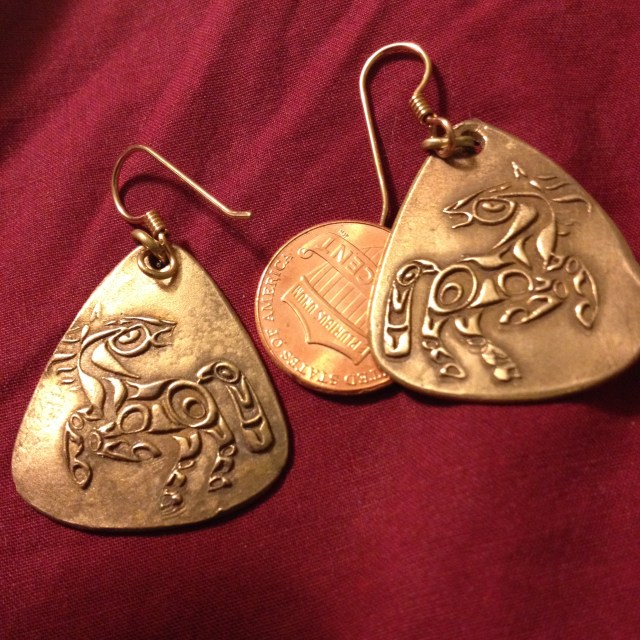
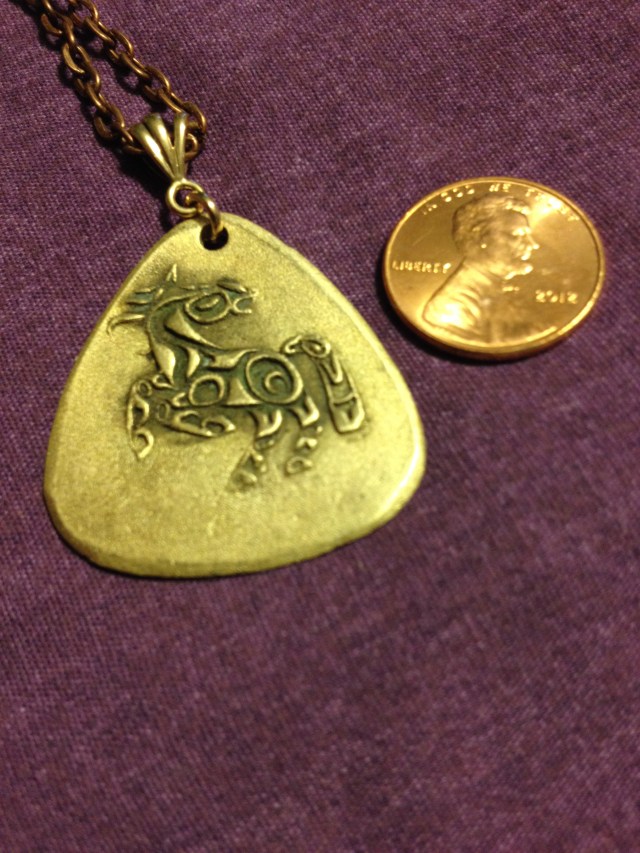
IMG_0585These earrings show the type of detail you can get in bronze.  These turned out to be quite popular. Displaying them resulted in almost immediate commissions for a similar pair of earrings and for a pendant with the same design.
IMG_0592

Here is the pendant mentioned above. It is quite shiny because I decided to hand polish it instead of using a tumbler. Polishing it with 400, 800, 1000 grit sandpaper (in that order) gave it a really nice surface. The horse in the pendant was patinaed prior to finishing; the horses in the earrings were not. This will help you decide if you do or do not want to patina your work. Silver pretty much demands it — with bronze, it is more of an artistic decision.

IMG_0591

This foliate mask shows that bronze takes details quite nicely.

IMG_0593

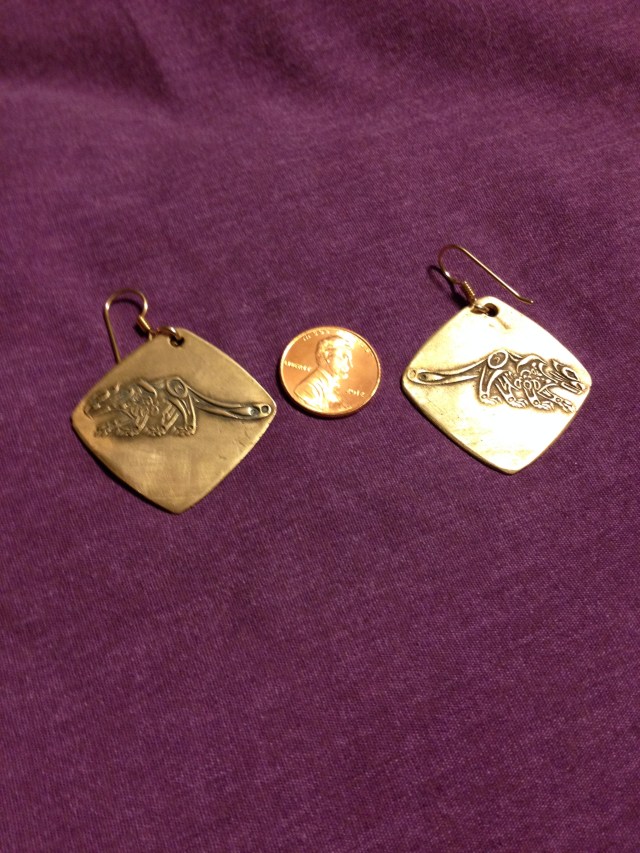
A pair of earrings, similar to the horse, but with a feline design. Are these stalking cats domestic cats or panthers? I’m not sure. You can interpret it as you wish. These, too, were hand polished with multiple grits of sandpaper.

IMG_0589

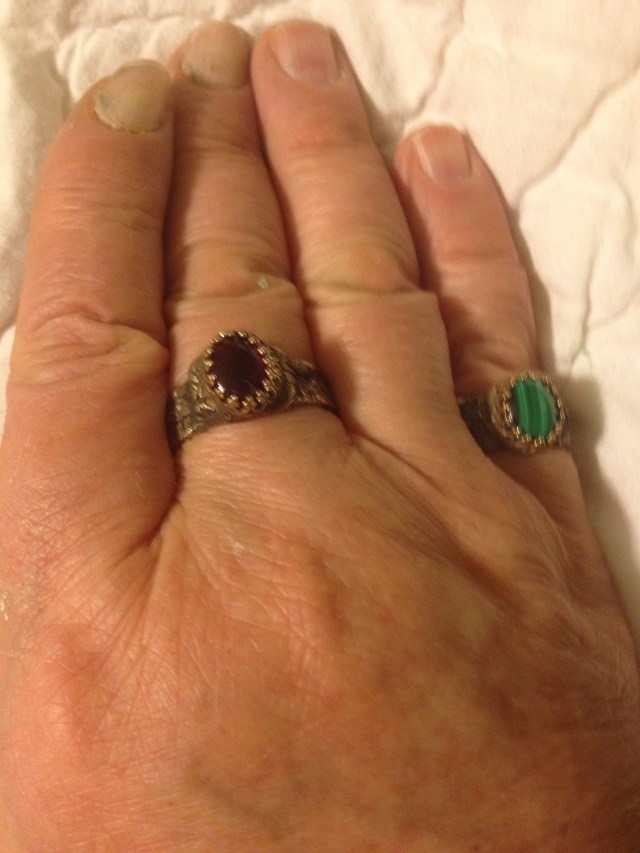
A pair of bronze rings. The red stone is synthetic ruby and the green is malachite. In both cases, the bezel wire was set into the metal clay and fired. Then, the stones were added later.

FullSizeRender

A bronze Mjolnir pendant I made for myself.

An artificial nugget: left over gold clay

I recently made a pair of gold clay earrings. I had a tiny amount of gold clay left over, not enough to be practical. What could I do? Mixed metals!

Directions for making the pendant below:

  1. Choose a shape (I chose a leaf). Cut it out of untextured silver clay, 0.5 mm thick. Roll more clay 0.5 mm thick and texture it. Cut an oval (or other shape, but ovals look natural) out of it. Around that, cut the same shape as the untextured clay.
  2. Dry both pieces. Join them with silver clay paste. Let that dry, then finish like any greenware.
  3. Roll the leftover gold clay to a thickness of 0.5 mm. Cut out an oval the same size and shape as the hole you cut before. Place it in the opening in the silver. Now comes the fun part. Using a clay shaper, work the gold clay you did not use into the oval, giving it the look of a natural nugget.
  4. After the gold dries, use syringe as you would if it were a gem. That will keep it from popping out. If any gold shows on the side, cover that. I know it’s a shame to cover gold, but leaving it exposed would look sloppy.
  5. Add a bail if you haven’t already. Do any last minute greenware finishing. I brushed the gold clay with denatured alcohol, as if it were a gem. I don’t know if that is necessary, but I didn’t want to risk having silver dust dull the gold Fire according to the instructions for firing gold clay.
  6. Brush, tumble, and patina as usual. Don’t worry — the gold won’t take patina.
  7. There you are, a lovely pendant with an artificial nugget as a focal piece. And you used every last scrap of your gold clay!

IMG_0561

An Adventure in Gold Clay

I’ve been curious about gold clay for some time. With an upcoming anniversary, I decided to go for it. Here is the account of my first time using gold clay. I have a picture of the finished product in chronological order, but I thought I would include one here so you know where we are heading.

IMG_0558

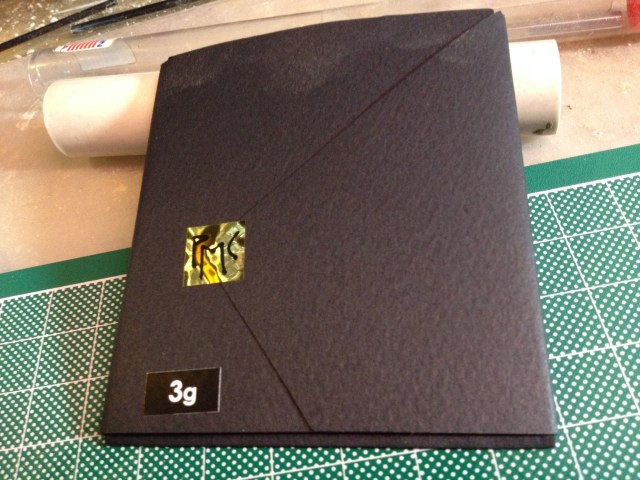
Gold clay comes in some pretty impressive looking packaging (as well it should). A three gram package (unopened) looks like ….

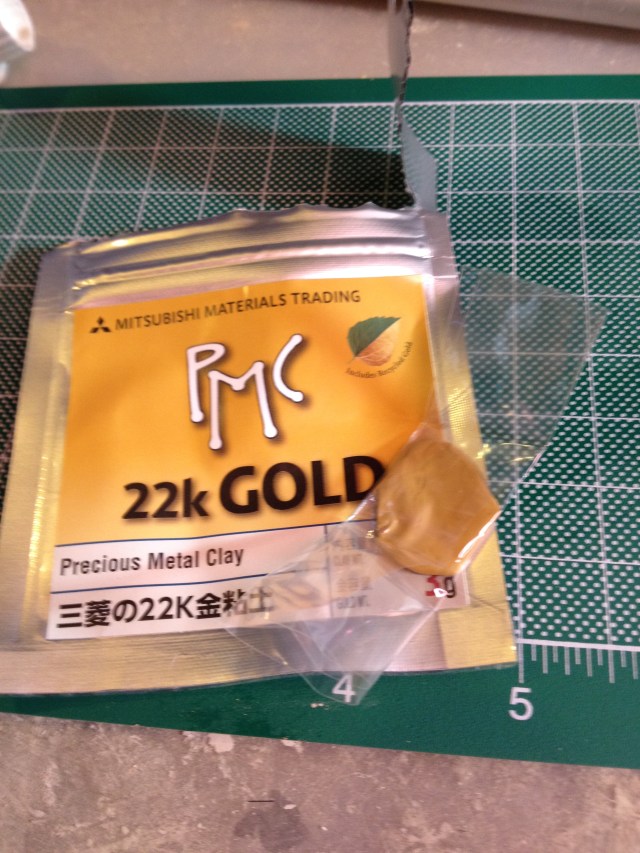
IMG_0548

I opened it, and found what was inside. Three grams of gold clay.  It’s a bit more than one needs to make one small earring. Gold clay is quite stiff, so it needs to be worked (inside the plastic wrapping) before you start to do anything with it. That was surprisingly easy. A few minutes of pressure with fingers, and it was at least as easy to work as copper clay.

IMG_0549

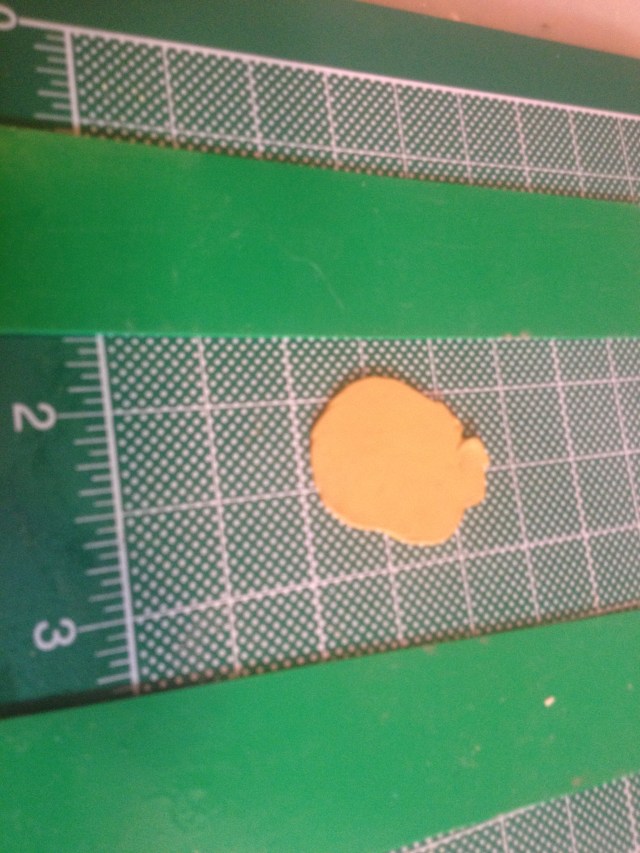
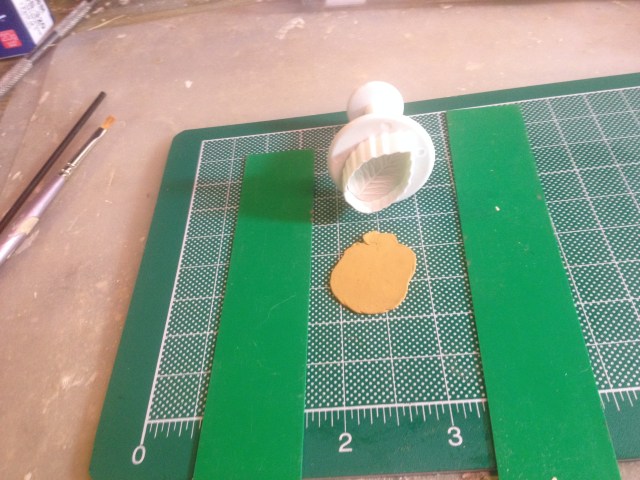
I rolled it out to 0.75 mm thick. That’s a good thickness for an earring and doesn’t use too much clay.

IMG_0550

I used a Lisa Pavelka rose leaf stamp (lisapavelka.com). Usually, I prefer to be more imaginative than using a commercially available stamp. However,  I didn’t want to take a chance that the piece might not work out.

IMG_0551

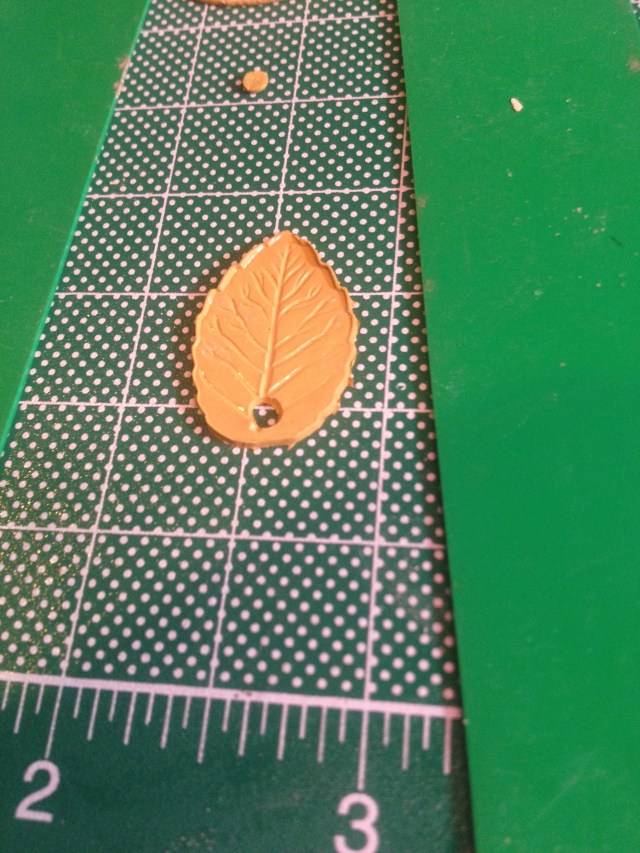
This is what a stamped leaf looks like. The circle was punched out to make an opening for the ear wire. Of course that went back into the stock of gold clay.

IMG_0552

I made two of them and put them on plastic Easter egg halves to dry. I wanted the leaves to have three dimensionality, and plastic eggs is a good way to achieve that. One of the leaves has a bit of extra around it. I trimmed that off after I took the picture.

IMG_0553

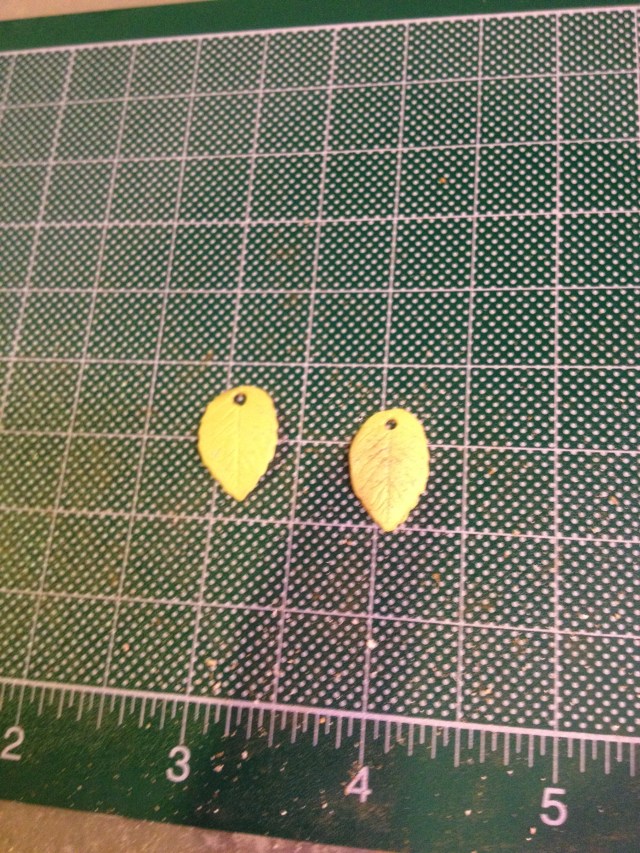
Here are the leaves after being green are finished and fired. Since these are pretty simple shapes, greenware finishing wasn’t all that hard. They aren’t all that impressive yet.

IMG_0556

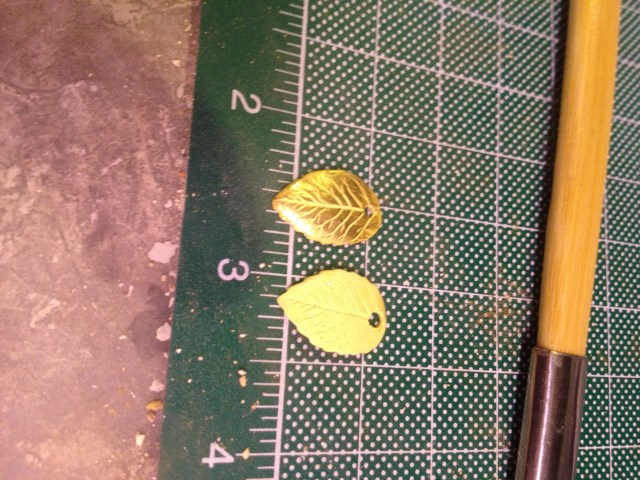
Making them shine requires burnishing with an agate burnisher. One leaf in this picture has been burnished and the other hasn’t. Obviously, I burnished both. However, photographing them like this makes the difference clear.

IMG_0557

After they are both burnished, here is the final product. I used bronze ear wires and jump rings so that the contrast with the gold would not be too large. I had a little over a gram of gold left over from my initial six grams after making the two earrings. That gold will not be wasted. Similarly, I made sure that what I filed off was saved. The coin is for scale.

IMG_0558

Review: Gold clay gives you a really impressive finished product. I’m not sure it is any better than using gold paste atop silver, so I might or might not ever do it again. Still, it’s probably worth it for a metal clay artist to have made at least one gold object.